
That shirt in the back of your closet, the one that still fits and still means something, isn't ruined because you did something wrong. It's yellow because of the chemistry that started the day you last wore it and never really stopped. Sweat, oxidation, bad storage, and bleach all leave behind the same color, but they're four completely different problems wearing one disguise.
Some of them come out clean. Some of them don't, no matter what you try next. The real question isn't whether yellow stains can be removed. It's which of the four you're actually up against.
Sweat and Antiperspirant Residue
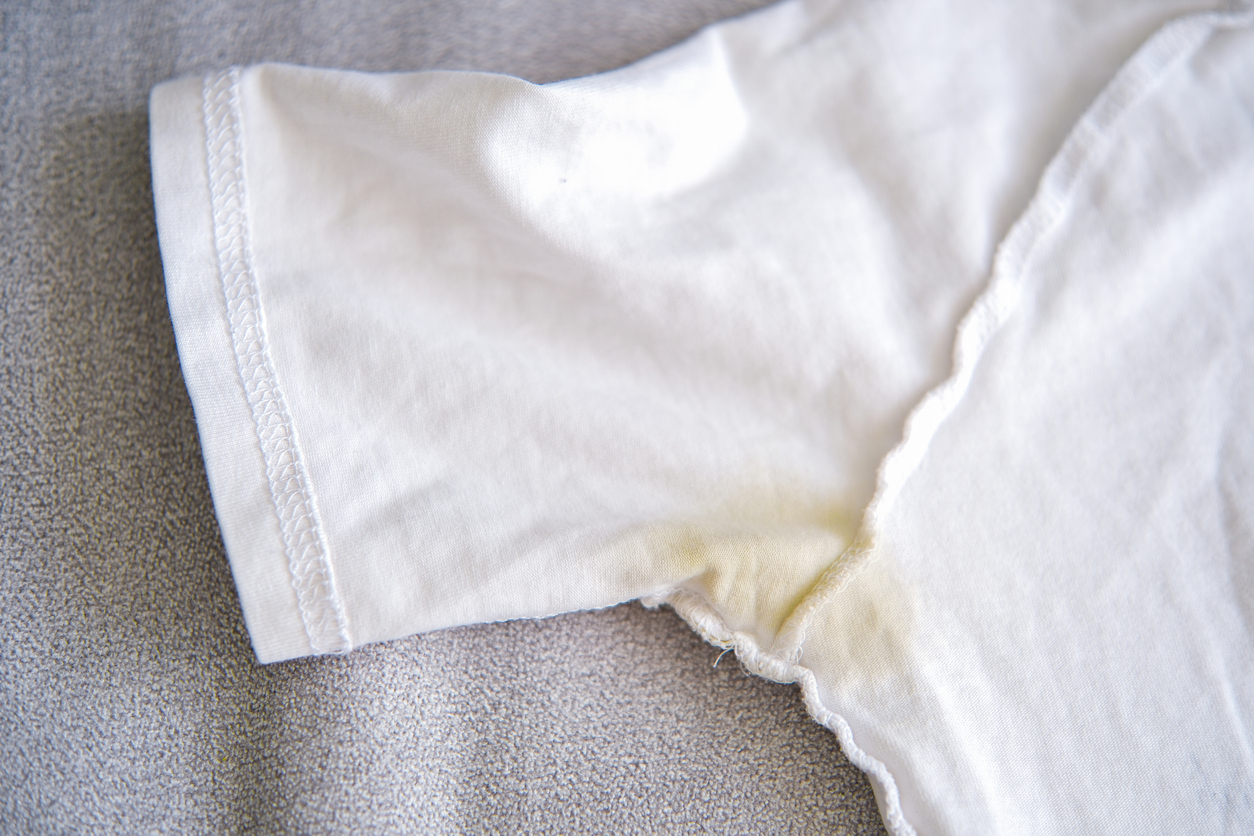
If the yellowing sits under the arms of a shirt or blouse, start here. This is the stain for which most people search when looking into yellow underarm stain removal, and the good news is it's usually the most fixable.
Most antiperspirants rely on aluminum-based compounds to block sweat glands. Those compounds don't rinse away. Wear after wear, they build up in the fabric and react with proteins in your sweat, forming a yellow-brown compound that won't dissolve in water.
Insoluble means detergent can't break it down, no matter how much you use. Run the shirt through ten wash cycles and the stain looks exactly the same, sometimes worse, because heat and agitation alone don't touch this bond.
The Aluminum Protein Chemistry Home Washing Cannot Break
Standard detergent lifts oil, dirt, and loose soil. It doesn't break a chemical bond between a metal salt and a protein. That takes an enzyme, specifically a protease, built to target that exact reaction.
This is why an enzyme-based pretreatment succeeds where a normal wash cycle fails, and it's why so many people give up on a shirt that was actually still fixable. If you haven't used bleach on the spot, expect significant improvement, and in many cases full recovery.
Age Oxidation on Stored Whites
Pull a garment from storage and notice the yellowing spreads evenly across the whole piece, not just one spot? You're likely looking at oxidation.
White cotton and linen shift toward yellow over time even under ideal conditions, because the cellulose fibers slowly oxidize. That process speeds up fast if any residue, such as body oil, sugar, or starch, sat on the fabric before you packed it away. Those residues oxidize right along with the fibers and darken faster than the surrounding cloth.
Age-oxidized whites respond well to treatment, though results vary by how long the piece sat and how severe the yellowing. A garment stored for two years behaves differently than one stored for fifteen, but you can expect real, visible improvement in most cases.
This cause shows up often on formalwear and uniforms, the pieces that spend most of the year in a garment bag or a drawer and only come out a handful of times. If you're eyeing a wedding dress, a dress uniform, or a christening gown that's picked up an ivory tint since the last time you wore it, this is almost certainly what you're dealing with, and it's one of the more forgiving causes on this list.
Improper Storage (Plastic, Cardboard, and Sunlight)
Sometimes the fabric isn't aging on its own. Check what it was stored in or near.
- Sealed plastic bags trap moisture against fabric, and that trapped humidity speeds up yellowing exactly where the plastic touches.
- Cardboard boxes carry acid from the paper pulp itself, and it leaches into fabric over months of contact, leaving yellow-brown patches.
- A closet with a light gap lets in sunlight, even for a few minutes a day, and bleaches and yellows the exposed section differently than the rest of the garment.
Look for uneven color. Storage related yellowing shows up heaviest exactly where the material made contact, with lighter color an inch or two away. That unevenness works in your favor: once you move the piece out of that environment, professional cleaning usually improves it quite a bit.
Chlorine Bleach Damage That's Been Compounded Over Time
If your first move after spotting yellowing was chlorine bleach, and the stain got worse or changed color, you're now dealing with a different problem than the one with which you started. This is the story we hear most often.
Bleach reacts with residual protein in the fabric, either from sweat, food, or another organic stain, and that reaction produces a yellow or tan discoloration chemically distinct from the original stain. It no longer sits on top of the fabric. It changed the fiber itself.
Why More Bleach Makes Bleach Caused Yellowing Permanently Worse
When a bleach treatment doesn't work, the instinct is to use more, use it hotter, or leave it on longer. Each choice deepens the reaction instead of reversing it. The American Cleaning Institute's general guidance on bleach chemistry makes the point clearly: chlorine bleach suits specific fiber types and specific stains, and using it outside those conditions, especially on fabric that's already reacted with bleach once, compounds the damage rather than fixing it.
Yellowing from repeated or improper bleach use usually doesn't fully reverse. You may see some improvement, particularly if the damage is recent and limited to a small area, but a full return to bright white is unlikely once this reaction has set in.
How to Tell Which Cause You're Looking At
You don't need a lab. Answer these questions and you'll usually land on the right cause.
- Where is the yellowing? Concentration under the arms or on a collar points to sweat and antiperspirant residue.
- How long was it stored? A year or more with even yellowing across the whole piece points to age oxidation.
- Is the color even or patchy? Heavier in specific spots points to a storage issue such as plastic, cardboard, or sun exposure.
- Did it show up after you used bleach? That points to bleach damage, and it changes what treatment can realistically achieve.
More than one answer sounds familiar? That's common. A shirt can carry antiperspirant buildup and a bleach mishap at the same time, which is exactly when a second opinion beats another round of guessing at home.
Color offers another clue, though it takes practice to read. Fresh sweat and antiperspirant residue runs more yellow than brown. Age oxidation leans toward a soft, even ivory across the whole piece. Storage damage shows a sharper line where fabric met plastic or cardboard. Bleach damage often looks slightly tan or gray at the edges, since you're looking at the fiber reacting, not a residue sitting on the surface.
The Home Mistakes That Turn Recoverable Yellowing Into Permanent Damage
Most of the damage we see doesn't come from the original yellowing. It comes from well meaning attempts to fix it.
- Bleaching a protein-based stain: sweat and antiperspirant residue set harder under bleach instead of lifting.
- Washing yellowed areas in hot water: heat accelerates the same protein setting reaction that makes the stain harder to remove.
- Running repeated wash cycles without pretreatment: this doesn't remove the residue. It spreads and deepens it across the fibers.
None of these mistakes come from carelessness. They come from reasonable assumptions – hotter water should clean better, bleach should whiten, more washing should help – that happens to be wrong for this specific kind of stain.
What Professional Cleaning Does Differently for Each Cause
The core difference is sequence. A professional identifies the cause first, then chooses the treatment, instead of applying one standard method and hoping it works.
Once the cause is clear, the treatment matches it: targeted enzyme formulas for protein-based residue, reducing agents for oxidation, and pH-neutral solvent cleaning throughout, so the process doesn't set residues further the way home bleach or hot water often does. Temperature stays controlled at every step, since heat is one of the fastest ways to lock in the exact discoloration you're trying to remove.
Here's what you can realistically expect, by cause:
- Sweat and antiperspirant residue: full removal in many cases, especially if bleach never touched the area.
- Age oxidation: significant improvement is typical, with full restoration less common in older or more severe cases.
- Storage related yellowing: significant improvement is typical once you treat the garment and store it correctly going forward.
- Bleach damage: minimal to modest improvement is the realistic range, with full recovery unlikely.
Before You Try Bleach Again, Bring Your Garment to CC Clean
Standing in front of a yellowed shirt and trying to decide if it's worth saving? That judgment call is exactly what CC Clean in Portland, Oregon makes every day. Before we begin any dry cleaning process, we identify what's causing the yellowing, use the treatment that best fits the fabric and stain, and tell you honestly when a garment is beyond recovery instead of giving you false hope.
Bring your garment to CC Clean for professional dry cleaning. If you'd like to assess the situation first, give us a call and describe the yellowing and its history. We'll let you know what to expect before you make the trip.
CC Clean:
Address: 3450 N. Williams Ave., Ste. 3, Portland, OR, 97227
Phone: +1 (971) 397-6936
Email: CCcleanpdx@gmail.com