
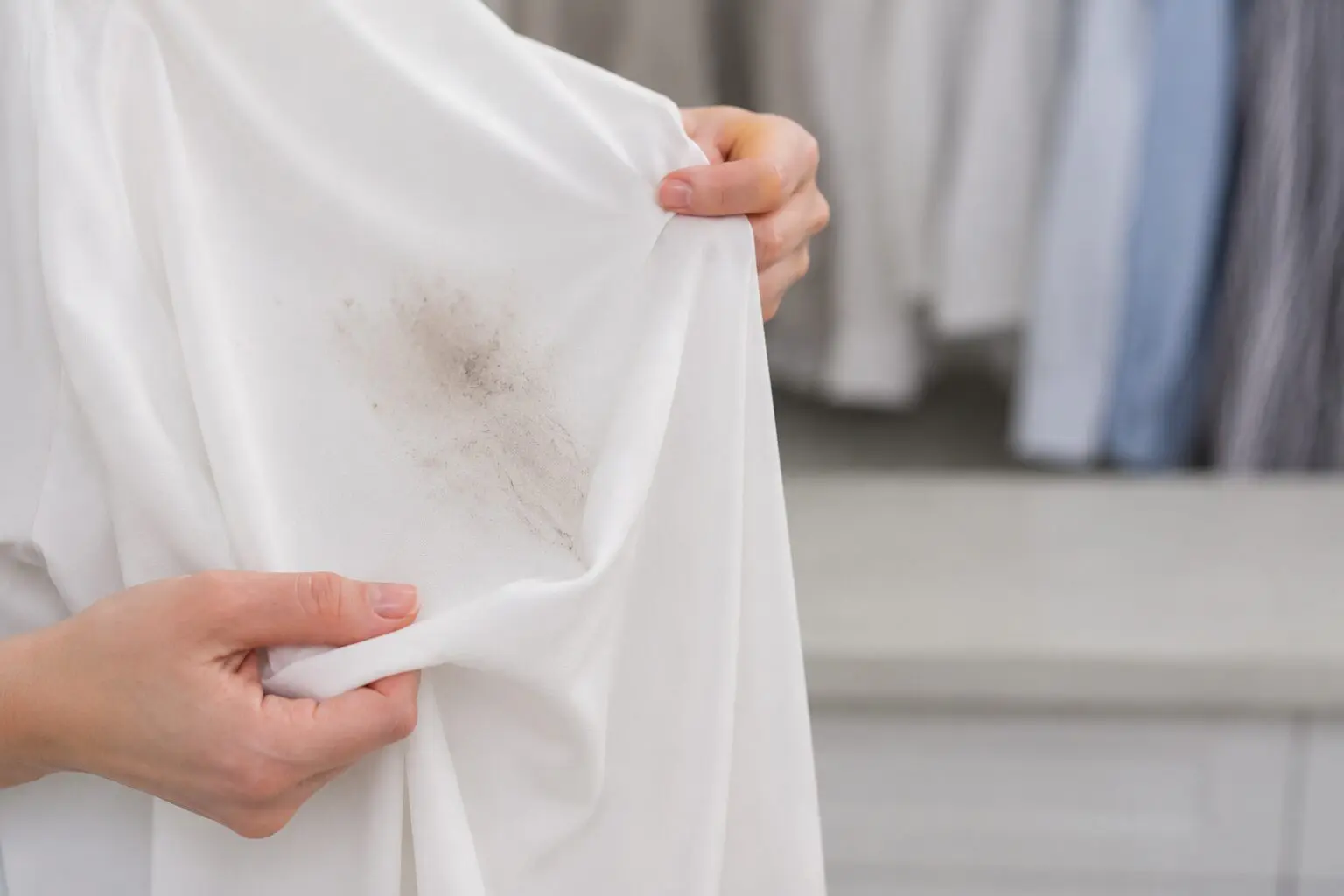
You weren’t careless. You just used the same tricks most people try at home. You rinsed it, scrubbed it, sprayed something on it. But some stains have a way of bonding to fabric fast, especially when heat, soap, or the wrong cleaner gets involved. That’s why a stain can look more noticeable after you try to remove it yourself.
If you’re a professional in Portland dealing with a stained dress shirt, a parent staring at a ruined jacket, or someone who just spilled red wine on a garment they actually care about, here’s what you need to know. These five stain types don’t just resist home treatment. In many cases, home treatment is the reason they become permanent.
01 Red Wine | Immediate Rubbing Makes Professional Removal Harder
Red wine is the most searched clothing stain on the internet. It’s also the one where every natural instinct works against you.
Why Rubbing Is The Worst Thing You Can Do
Red wine contains tannins, natural compounds that bond aggressively to fabric fibers, especially cotton, linen, and silk. The moment you rub a fresh spill, two things happen at once: the tannins spread into a wider area of the weave, and the friction physically damages the fiber surface, visible even after the stain is gone. You’re grinding the stain in, not lifting it out
Heat locks it in permanently. Hot water, a hair dryer, leaving the garment in sunlight: any heat source accelerates the chemical bonding of tannins to the fiber. A red wine stain that’s been heat exposed may not fully respond even to professional pretreatment. That window closes fast.
What Professional Dry Cleaning Does Differently
Enzyme-based and dye release agents are applied directly to the stain before the main cleaning cycle. These break the bond of the tannins at a chemical level, a step household detergent can’t replicate. The pretreatment stage is where the real work happens. Home washing skips it entirely.
If you just spilled: Blot (never rub) with a clean white cloth to absorb as much excess liquid as possible. Apply no heat. Do not pour water on it. Take the garment to a professional the same day. Fresh tannin stains respond far better than those that have had time to set.
02 Oil and Grease | Water Makes This Stain Spread Rather Than Lift
Cooking oil, salad dressing, body lotion, machine grease. Oil-based stains are the second category where the instinct to clean immediately consistently makes things worse.
Water doesn’t work because water and oil don’t mix.
Applying water to a fresh oil stain dilutes the water soluble surface residue but pushes the oil itself deeper into the fiber, often spreading it outward. What started as a defined spot becomes a larger shadow that’s harder to treat.
Dish soap works partially but not completely.
It handles surface oil on thin fabrics but doesn’t penetrate the fiber to reach embedded oil compounds, particularly on dense fabrics such as wool or canvas. It also leaves residue that traps more dirt over time if not fully rinsed.
This is historically why dry cleaning was invented. Dry cleaning solvent is specifically non aqueous (no water) and dissolves oils at the fiber level. Oil stains are among the most responsive to professional solvent treatment, especially when brought in before they’re heat set in a dryer. The process exists because water-based cleaning couldn’t solve this problem.
Have a stain right now? Don’t let it set. CC Clean in Portland specializes in professional stain treatment. Drop off before 10:00 AM for same-day service.
03 Ink | Attempting to Remove It at Home Almost Always Makes It Permanent
Ink stains carry more misinformation than almost any other category. The remedies circulating online range from ineffective to actively damaging.
The Hairspray Myth, Debunked
The theory: alcohol in hairspray dissolves ballpoint ink. With older high alcohol formulas, it occasionally worked. Modern hairsprays have largely dropped those formulations. What you apply now is a sticky, polymer heavy product that bonds to fabric and traps the ink further into the fiber. You add a secondary contamination layer the professional now has to work through in addition to the ink itself.
Why Alcohol-Based Home Remedies Are Fabric-Specific Risks
- Rubbing alcohol can partially dissolve some ballpoint ink on durable cotton. But on silk, acetate, or acetate blend fabrics (common in dress shirts, blouses, and linings), it causes immediate, irreversible dye damage. You may remove some ink and create a permanent bleached patch in the same spot. It’s a gamble that rarely pays off on anything worth keeping.
- Hand sanitizer, another common recommendation, contains alcohol plus moisturizing agents that leave their own residue on the fabric. You add compounds on top of the ink, not remove compounds from the fabric.
Before you try anything at home: Check the fabric label. Silk, acetate, rayon, and delicate blends go directly to a professional. Do not apply alcohol or any solvent without knowing the fabric first.
What Professional Cleaning Does
Fabric-safe solvents are applied at controlled concentrations, chosen based on the specific fabric and ink type. Ballpoint, rollerball, gel, and printer ink all respond to different treatments.
The honest limit: Very old or heat set ink may be partially permanent regardless of treatment. Fresh ink brought in early is always the highest probability scenario for full removal. If you read this with a fresh ink stain, don’t try anything at home. Blot gently, take it in.
04 Sweat and Deodorant Buildup | More Complex Than They Look
Yellow armpit stains on white shirts are one of the most misunderstood stain types. Not because they’re hard to see, but because most people don’t understand what actually causes them.
It’s Not Just Sweat
The discoloration is a compound formed by perspiration proteins and salts combining with aluminum from antiperspirant. When this mixture hits heat (body heat, washing heat, the dryer), it bonds to cotton and synthetic fibers in a way that gets progressively harder to reverse. The shirts that get washed most often are frequently those with the worst armpit staining.
Why Repeated Washing Makes Yellow Stains Worse
- Standard detergent doesn’t break down aluminum perspiration compounds
- Heat from every dryer cycle deepens the chemical bond
- Staining darkens and stiffens the fabric over time
- By the time it’s visually obvious, multiple washes have already made professional removal harder
How Professional Dry Cleaning Handles It
Enzyme-based pretreatment agents target protein and aluminum compounds specifically, breaking them down before the cleaning cycle. Commercial grade enzyme concentrations are significantly higher than anything in retail products, which is why the same approach at home gives inconsistent results. The collar and underarm areas are treated individually before the shirt enters the machine.
Prevention Tips
- Treat perspiration staining early, before multiple hot wash cycles accumulate and set the compound further.
- Consider aluminum free deodorant on days you wear delicate or light colored garments. Aluminum is half the equation. Remove it and the staining rate drops significantly.
- Don’t put a visibly stained shirt in the dryer. Air dry, inspect, and if the yellow is still there, take it to a professional before the next heat cycle.
05 Mud and Soil | Treating It While Wet Is the Most Common Mistake
Mud feels like the simplest stain on this list. It’s just dirt, and dirt washes off, right? On delicate fabrics and technical outdoor gear, the instinct to clean it immediately is the specific mistake that makes it harder to remove.
The wet treatment mistake: Fresh mud is a suspension of clay, mineral particles, and water. Wipe or rinse it while wet and you push that suspension deeper into the fabric while the soil is still in liquid form. Dry mud sits on top of the fabric structure. Let it dry completely, brush off the crust gently, and you remove most of the stain before treatment even begins.
Why Delicate Fabrics and Technical Gear Still Need Professional Care
- On wool and structured garments, even gentle brushing causes surface abrasion. Pilling on wool, snag marks on silk, and distortion on structured pieces are all risks of aggressive home treatment on mud stained delicate items.
- On waterproof technical gear with DWR (Durable Water Repellent) coatings, standard household detergents strip that coating over time. The mud comes out, but so does the waterproofing. Professional cleaning uses agents compatible with DWR fabrics and can restore water repellency after cleaning.
The right move for mud: Let it dry completely. Brush off the surface crust. Then take in the garment rather than running a wash cycle, especially for wool, structured clothing, or any technical gear with waterproofing.
Three Rules for Every Stain on This List
For all five stain types above, the consistent risk of home treatment isn’t just that it won’t work. It’s that the most natural responses often make professional removal harder or impossible. The safest first action for any of these stains on a garment worth keeping are:
- Blot. Never rub.
- Apply no heat.
- Take it to a professional promptly.
That’s it. Everything beyond those three steps is a risk calculation, and on a garment you care about, the math almost always favors taking it in.
Bring Your Stained Garments to CC Clean in Portland

The sooner tough stains are treated professionally, the better the chances of fully restoring your garments without damaging the fabric or fading the color. At CC Clean, we use advanced eco-friendly cleaning systems and professional stain treatment methods to safely remove stubborn spots while helping your clothes stay fresh, polished, and ready to wear.
Drop off your garments before 10:00 AM for same-day service or schedule a pickup today.
📍 3450 North Williams Avenue, Portland, Oregon, 97227
📧 Email us: CCcleanpdx@gmail.com
Frequently Asked Questions
Most fabrics handle dry cleaning well, and many delicate fabrics are genuinely safer in dry cleaning than in any home washing method. A small number of specialty items, including some heavily embellished garments and certain waterproof treatments, require specific approaches. A professional dry cleaner inspects every garment before cleaning and flags any concerns before proceeding.
Standard turnaround at most professional cleaners is two to three business days. Rush service is often available for an additional fee if you need something back faster. Ask at drop-off if timing is a concern rather than assuming a standard turnaround fits your schedule.
For regularly worn suits and blazers, two to three professional cleanings per year is a reasonable baseline. Between cleanings, spot-treating minor marks and using a clothes brush to remove surface dust and lint extend the life of the garment and reduce how often full cleaning is necessary.
Properly executed dry cleaning should not cause shrinkage. Because the process uses no water, the primary cause of fiber contraction in natural fabrics is never present. Garments that come back smaller than they go in were either cleaned incorrectly or had pre-existing issues the cleaning process revealed.
Dry cleaning uses chemical solvents and is designed for delicate, structured, or high-care garments. Wash and fold uses water, detergent, and heat and is appropriate for everyday fabrics such as cotton and polyester, as well as most casual clothing. Your care labels tell you which method each garment needs.